
 Fabrics
 Elastics & Velcro
 Buttons & Zips
 Threads
 Ribbon & Binding
 Curtain Accessories
 Haberdashery
 Clearance
Showing all 4 results
Curtain Heading Tapes & Associated Accessories
Nova Trimmings offers a complete selection of heading tapes and supporting accessories — essential for creating professional curtain finishes, structured pleats, and durable linings. Below are descriptions of the main types, their materials, uses, and design benefits.
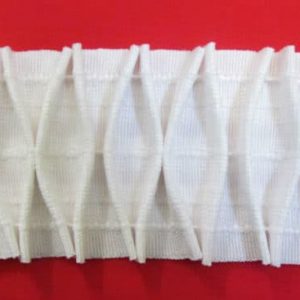
Diamond Header Tape (Curtain Fabric Diamond Header Tape)
Diamond header tape (also called diamond pleat tape) is a specialised curtain heading tape that helps form elegant diamond-shaped pleats at the top of curtains. It gives a decorative, tailored look while providing structure and support.
- Materials: Typically a polyester or woven tape with reinforcement threads or cords to guide pleats
- Uses: Ideal for mid- to heavy-weight curtain fabrics where a more decorative pleat style is desired
Benefits:
- Produces distinctive diamond pleats (a more formal, shaped effect)
- Helps maintain shape and crispness in the heading
- Works well in interiors where curtain tops are a focal point
Pencil Pleat Curtain Heading Tape
Pencil pleat tape is one of the most commonly used heading tapes for curtains. It contains one or more lines of drawstring or cord pockets that gather the fabric into tightly spaced “pencil” folds.
- Materials: Woven polyester or cotton blend tapes with pleat cords
- Uses: Suitable for light to medium weight fabrics, standard curtain widths
Benefits:
- Versatile and easy to work with
- Gives a consistent, classic pleated appearance
- Compatible with standard curtain hooks, rods or tracks
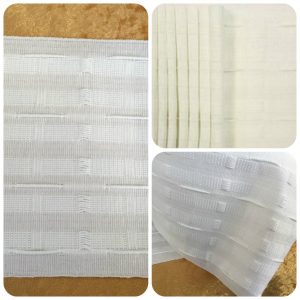
General Curtain Heading Tape
This is the more generic or “standard” heading tape used for various curtain styles. It may be plain or incorporate draw cords, tape pockets, or pleating guides.
- Materials: Polyester or mixed fibre woven tapes
- Uses: For general curtain installations where custom pleats are not required
Benefits:
- Offers flexibility for multiple hanging styles
- Easy to sew into curtain tops
- Serves as a base for decorative headings or variations
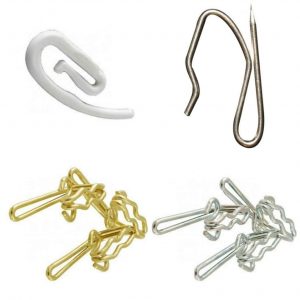
Curtain hooks
(sometimes called pleat hooks or curtain pins) are small metal or plastic hooks used to attach the curtain header (tape or hem) to the curtain rod, track, or pole.
- Materials: Metal (nickel, brass), stainless steel, or durable plastic
- Uses: Fastening curtain heading to rods, tracks, rings, or gliders
Benefits:
- Invisible once installed, preserving the aesthetic of the curtain
- Provides secure hold for pleat tapes or lining
- Available in sizes to suit different heading types
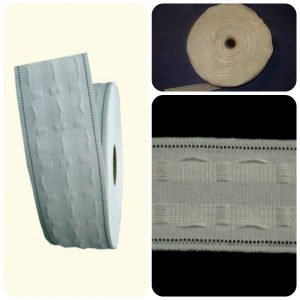
Curtain Tape
- “Curtain tape” is a broader term often used interchangeably with heading tape. It includes tapes with pleat cords, gathering features, or reinforcement. Essentially, curtain tape forms the structural top of the curtain.
- Materials: Woven fibre (polyester, cotton blends) with internal cords or reinforcements
- Uses: Adding strength, structure, and the means to create pleats or gathers
Benefits:
- Improves drape and hanging efficiency
- Provides uniform gathering across the curtain width
- Makes installation and adjustment simpler
Buckram
Buckram is a stiff, open-weave fabric often used to reinforce curtain tops, valances, pelmets, or cornice boards. In curtain construction, it is used in the heading area to give firmness.
- Materials: Stiffened woven fabric (cotton or synthetic blends)
- Uses: Reinforcement at the curtain heading / top edge, to prevent sagging or distortion
Benefits:
- Adds body and structure
- Helps maintain straight lines in heavier curtains
- Supports pleats or heading shapes without bending
Pinch Pleats
Pinch pleats (also known as “French pleats” or “triple pleats”) are a decorative, classic curtain heading style formed by pinching and stitching folds of fabric at regular intervals. The pleats are sewn down partway to the curtain body, creating a neat, tailored look.
- Implementation: Usually formed using heading tape or by hand pleating, with pleat hooks or pins inserted into the tape or back of the pleat
- Uses: Suited to formal interiors, traditional décor, or where structured pleats are preferred
Benefits:
- Offers a refined and elegant appearance
- Allows control over pleat depth and spacing
- Provides fullness and depth to the curtain body